

Home | Planting Seeds of Resilience
Planting Seeds of Resilience
Program Information
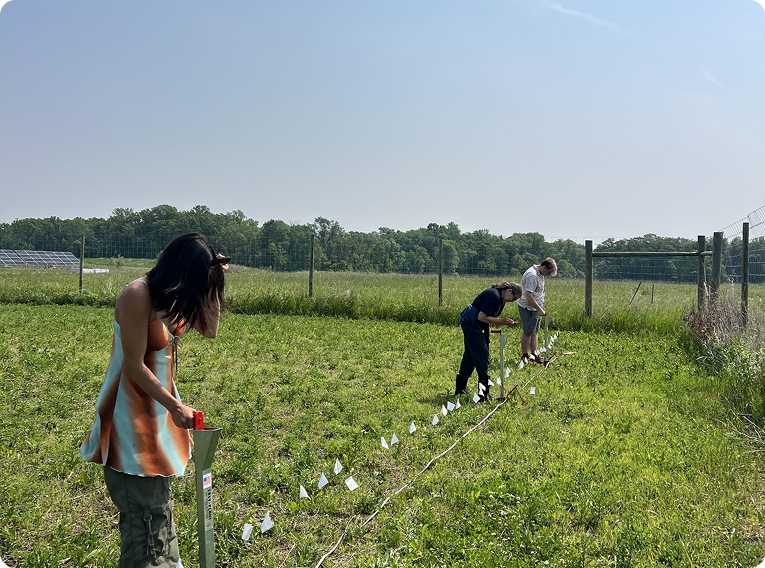
Community Extension (CE) at White Earth Tribal and Community College (WETCC) is running a two-year program, “Planting the Seeds of Resiliency: Growing Food Sovereignty through Community Seed Keeping,” our goal is to support community members in learning to plant, grow, and save their own seeds. In partnership with White Earth Natural Resources Food Sovereignty Program, White Earth Land Recovery Project, and White Earth Public Health, participants will gain hands-on monthly experiences in the full cycle of seed stewardship-from planting and tending to harvesting, cleaning, storing, and sharing. You’ll receive the tools, materials, and guidance needed to learn both the science and the stories carried by our seeds. Together, we’ll strengthen food sovereignty, reciprocity, and community resilience.
If you have not signed up to join our seed cohort please complete the application in the link provided. Program Application
Cohort Resources
Listed here are the documents provided throughout our program. As Community Extension and our partners work and develop future resources you can find them listed below. This list is ever expanding so be on the look out for new information as it is available.
March Educational Resources
Seed Starting 101
Which Seeds to Start Indoors and Which Seeds to Direct Sow
Vegetable Seed Germination Temperatures
February Educational Resources
The Process of Fertilization and Pollination
January Educational Resources
Seed Diagram
Diagram of a Seed
10 Tips on How to Improve Germination
Kick Off Event Educational Resources
Seed Cohort Opening Letter
Seed Cohort Contact Page
Seed Saving Tri-Fold
Seed Packet Labels
Pumpkin Oatmeal Bar Recipe
Cornbread Recipe
Seed Saving Guide
Plant Pollution and Seed Maturity
How to Grow a Three Sister Garden
How to Store Seeds
Six Pillars of Indigenous Food
Plant and Seed Anatomy
Table of Plant Types
Ojibwemowin Plant Names
Seed Saving Book
Quantity Plant Guide
Squash Cross Pollination
Vegetable Seeds Per Ounce
Crop Specific Seed Saving Guide
Seed Saving Terminology
Comparison - Wet Seed & Dry Seeds
Seed Cohort Opening Letter
Seed Cohort Contact Page
Seed Saving Tri-Fold
Seed Packet Labels
Pumpkin Oatmeal Bar Recipe
Cornbread Recipe
Seed Saving Guide
Plant Pollution and Seed Maturity
How to Grow a Three Sister Garden
How to Store Seeds
Six Pillars of Indigenous Food
Plant and Seed Anatomy
Table of Plant Types
Ojibwemowin Plant Names
Seed Saving Book
Quantity Plant Guide
Squash Cross Pollination
Vegetable Seeds Per Ounce
Crop Specific Seed Saving Guide
Seed Saving Terminology
Comparison - Wet Seed & Dry Seeds
Contact Information
Connect with our staff for guidance, support, and answers to your questions.
WETCC Staff

Sativa Warren
Community Extension Garden Educator
sativa.warren@wetcc.edu
(218) 936-8363

Maria Fatz
Community Extension Coordinator
maria.fatz@wetcc.edu
(218) 936-8349

Diane McArthur
Community Extension Supervisor
diane.mcarthur@wetcc.edu
(218) 936-8350

Michelle Warren
Community Extension Director
tbellanger@wetcc.edu
(218) 936-8351
White Earth Natural Resource
Nicole LaFriniere
Food Sovereignty and Security Coordinator
nicole.laFriniere@whiteearth-nsn.gov
(218) 935-3562
White Earth Public Health

Gina Boudreau
Tobacco Coordinator
gina.boudreau@whiteearth-nsn.gov
(218) 401-3174
White Earth Land Recovery Project
Margaret Rousu
Executive Director
rousu20@gmail.com
(218) 375-2012